




Homeowner Q&A · Full home renovation
Most families do not move out for a whole-house renovation. The real questions are which rooms stay livable, how dust and utilities are handled day to day, and when it actually makes sense to leave for a stretch.
- 9 minute read
- Updated October 22, 2026
- Sources: EPA · BAAQMD · CSLB
The short answer
You can usually live at home through most of a whole-house renovation. Contractors sequence the work room by room, seal off active work zones with containment, and keep at least one kitchen setup and one bathroom usable most weeks. The exceptions are short, planned stretches: the days a kitchen or bathroom is fully disconnected, and any period with heavy dust-generating work on an older home where lead or asbestos testing is still pending.
The practical plan is to get the schedule, the containment approach and the utility shutoffs in writing before the crew starts, not to decide room by room as it happens.
Four things to settle before week one
- 1
Get a phase calendar
Ask for the weeks each room is unusable, not just a total timeline. That is what lets you plan meals, showers and work-from-home days.
- 2
Containment is not optional
EPA requires sealed plastic sheeting over floors and openings whenever painted surfaces are disturbed in a pre-1978 home, with the work area isolated from the rest of the house.
- 3
Utilities get a shutoff plan
Water, power and gas interruptions should be scheduled and announced in advance, room by room, not discovered when a tap runs dry.
- 4
Some days you should leave
Air-district notice periods and heavy demolition days are the times to plan to be out of the house, especially with kids, pets or breathing conditions in the home.
Can we stay, phase by phase
“Can we live here during the renovation” depends on which phase is running. A whole-house project moves through several of these, sometimes more than once if the scope changes.
| Phase | What is happening | Staying at home |
|---|---|---|
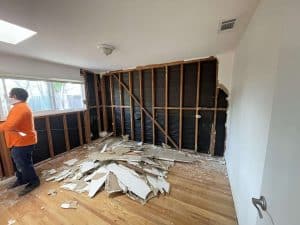
| Demolition / strip-out | Finishes and fixtures come out; dust, noise and debris are at their peak | Usually workable with containment; heavy days are better spent elsewhere |
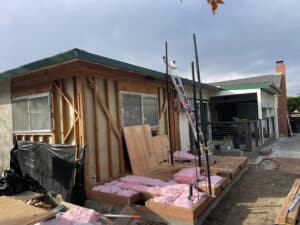
| Rough-in (framing, electrical, plumbing) | Walls are open; power or water to a zone may be off for hours at a time | Workable; expect scheduled utility interruptions, announced ahead |
| One bathroom or kitchen out of service | That single room is fully disconnected until fixtures and connections are back | Workable if you have a second bathroom or a temporary kitchen setup |
| Whole-house structural or full kitchen+bath overlap | No functioning kitchen and limited bathroom access at the same time | This is the stretch most families plan to be out for, even briefly |
| Finishes, paint, flooring, punch list | Lower dust, mostly cosmetic and detail work | Usually the easiest phase to stay through |
Ask your contractor to mark these phases on an actual calendar, not just name them. “About six weeks” does not tell you which week the kitchen sink disappears.
How dust and containment actually work
Dust control is not a courtesy, it is a set of specific practices, and in an older home two sets of rules shape how it is done.
Lead-safe containment (homes built before 1978)
EPA’s renovation rule requires covering the floor of the work area with taped-down plastic sheeting extending at least six feet beyond the surfaces being disturbed (or far enough to contain the dust), sealing doors, windows and HVAC vents with sheeting, and using sheeting at least 6 mil thick. The small-job exception (6 sq. ft. per interior room) does not cover demolition or window replacement.
Source: EPA Renovation, Repair and Painting program · EPA: Steps to Lead-Safe Renovation (PDF)
Asbestos wet methods and enclosures
Where asbestos-containing material is disturbed, the Air District’s rule calls for keeping it adequately wet during cutting, stripping or removal, and for sealed enclosures, often with a negative-pressure HEPA system, when larger quantities are involved. Waste is kept wet and sealed into leak-tight containers.
Source: BAAQMD Regulation 11-2 · BAAQMD asbestos permits page
Notice before the noisy days
The Air District requires notice at least 10 business days before any demolition, and before renovations removing set amounts of asbestos (100 sq. ft., 100 linear ft., or 35 cubic feet). Four-unit-or-fewer residential buildings have a 72-hour option with an added fee. Those dates are fixed, which is exactly why they are useful for planning who is home that day.
What this means day to day: the rooms you are living in should be sealed off from the work zone with taped plastic, not just a closed door, and HVAC registers in the work area should be covered so dust does not travel through the ducts to the rest of the house.
Water, power and gas during the work
Utility interruptions are routine in a whole-house renovation, and they go smoother when they are scheduled instead of discovered.
- Water. Plumbing rough-in and fixture swaps mean the water to a bathroom or kitchen zone is off for stretches, usually scheduled in advance. Ask which bathroom stays live each week.
- Power. Circuits in the work area are typically de-energized before electrical work starts; the rest of the house keeps power unless a panel upgrade is underway, which is usually a short, planned outage.
- Gas. Any gas line work (range, water heater, furnace) gets capped and tested before and after; your contractor should tell you exactly when hot water or cooking gas will be out.
- HVAC. Registers in the work zone get covered during demolition; if the whole system is being replaced, expect a no-heat or no-AC window and plan around it.
None of this needs to be a surprise. Ask for utility interruptions to be called out on the same calendar as the room-by-room phase schedule.
A typical week living through it
Projects vary, but most occupied renovations settle into a rhythm like this.
Monday walkthrough
Crew lead confirms the week’s plan: which rooms are active, any utility shutoffs, and whether a noisy or dusty day is scheduled.
Containment check
Plastic sheeting and door seals on the work zone are checked before work starts for the day, especially after a weekend.
Daily access
A clear, swept path to the rooms you are using is kept open; the crew resets it at the end of each day, not just at the end of the job.
Midweek utility windows
Any scheduled water, power or gas interruption happens on the day it was announced, with a heads-up that morning.
Surprises on paper
If a wall opens onto something unexpected (old wiring, hidden moisture, a material that needs testing), work in that area pauses and the change is documented before it continues.
Friday reset
Work areas are cleaned and secured for the weekend; HVAC registers stay covered if demolition resumes Monday.


Living-at-home readiness checklist
Check each item before the crew starts
Tick items as you confirm them. On this device your progress is remembered, and nothing is sent anywhere.
0 of 10 checked
Questions homeowners ask
Can we really stay in the house for a whole-house renovation?
Often yes, for most of it. The exceptions are short, identifiable stretches: the days a kitchen or every bathroom is disconnected at once, and any heavy demolition day, especially in an older home where asbestos or lead testing is still pending. Ask for those stretches marked on the schedule rather than discovering them.
How do you keep dust out of the rooms we are still using?
The work zone is sealed from the rest of the house with taped plastic sheeting, HVAC registers in that zone are covered, and in pre-1978 homes EPA’s renovation rule sets minimum sheeting coverage and thickness. Daily cleanup keeps dust from migrating room to room.
Will there be asbestos or lead dust if our home is older?
It depends on what is behind the finishes being disturbed, which is why testing suspect materials before demolition matters. Where asbestos is confirmed, the Air District’s rule requires wet methods and, often, sealed enclosures. Where lead paint is present, EPA requires certified firms and lead-safe containment. Neither is guesswork once materials are tested.
How much notice do we get before a disruptive day?
Air-district notification for demolition and larger asbestos-related renovation has a fixed lead time, at least 10 business days in most cases (72 hours for small residential buildings, for a fee). Your contractor should also give you a shorter heads-up, typically a few days, for any planned utility shutoff.
What happens to our water and power during plumbing or electrical work?
Interruptions are scheduled around the rooms being worked on. Expect specific windows for water or circuits to a zone, not a blanket shutoff to the whole house, unless a panel or main-line upgrade requires it.
When does it actually make sense to move out for a while?
When a kitchen and every bathroom are out of service at the same time, when heavy demolition or confirmed asbestos abatement is scheduled, or when someone in the household has breathing sensitivities. Raise this at the estimate stage so it is priced and planned, not improvised mid-project.
Sources and next steps
Where to read the originals yourself:
- EPA: Renovation, Repair and Painting Program, lead-safe requirements for pre-1978 housing.
- EPA: Steps to Lead-Safe Renovation (PDF), containment and plastic-sheeting specifics.
- BAAQMD: Asbestos Demolition and Renovation Notification, notification timing and thresholds.
- BAAQMD Regulation 11-2, wet methods and enclosure requirements.
- CSLB: A Consumer’s Guide to Asbestos, where asbestos is found in homes and licensing at 100 square feet.
- CSLB license check, to verify any contractor’s license and classifications. Quartz Construction & Remodeling’s license number is 1003436.
Facts in this guide were checked against these pages in October 2026. Regulations and fees change, so verify before you rely on them.
