


Decks & balconies · 2 photos
Composite Deck with Built-In Benches and a Dark Privacy Screen
A warm-toned composite deck with benches built into its edges, wide steps and a dark slatted privacy screen, set beside a mature shade tree.


Deck repair · San Jose & the Bay Area
Soft boards, loose railings and rusted fasteners are easy to ignore until they become a safety problem. We inspect the whole deck, fix what is failing, and tell you plainly when repair makes sense and when replacement does.
Industry Resources & Standards:
Repair a deck when the framing is sound and the damage is limited to boards, railings, stairs or fasteners. Replace it when posts, beams or the connection to the house are rotted, cracked or undersized, or when the repairs would cost most of what a new deck would.
The structure underneath decides, not the surface. That is why every repair estimate should start with an inspection of the framing, footings and the ledger connection.
Check these once or twice a year, and after the rainy season. If you see one, the cause is often underneath what you can see.
Wood that dents under a screwdriver is decaying. The boards may be the only problem, or the joists beneath them may be too.
Next step: Probe the joists under the soft spot before ordering new boards.
A railing has to resist real loads. Posts that move usually mean weak attachment or rot where the post meets the framing.
Next step: Treat the railing as unsafe until it is re-attached with proper hardware.
Corroded nails, screws and joist hangers lose strength, and boards lift or squeak as they loosen.
Next step: Replace with exterior-rated, corrosion-resistant fasteners and hangers.
The ledger connection carries much of the deck's load. Water getting behind it rots the house framing and the ledger.
Next step: Stop using the deck and have the ledger and its flashing inspected.
Joists and beams that crack, split or sag are structural problems, not cosmetic ones.
Next step: Expect structural repair or replacement; boards alone will not fix this.
Weathering is often cosmetic. Cleaning, sanding and sealing can restore wood decking that is still sound.
Next step: Confirm the framing is sound first, then clean, sand and seal or re-deck.
| Part of the deck | Usually repaired when | Usually replaced when |
|---|---|---|
| Surface boards | A few boards are worn, loose or damaged and the joists beneath are sound | Widespread rot, splitting or movement across most of the surface |
| Railings and guards | Posts are solid and the damage is in rails, balusters or hardware | Posts are rotted or cannot be attached solidly to the framing |
| Stairs | Treads are worn and stringers are solid | Stringers are cracked, rotted or no longer support the treads |
| Joists | Damage is limited and can be sistered or reinforced | Rot or cracking is widespread or at the ends where they bear |
| Beams and posts | Surface weathering only, footings stable | Rot, cracks or footings that have moved or settled |
| Ledger connection | Flashing and fasteners are sound and water is kept off the house | The ledger is rotted, pulling away, or was attached without proper flashing |
A deck can mix both answers: for example, new boards and railings on repaired framing. A good estimate says which parts fall in which column and why.
Check footings, posts, beams, joists, the ledger connection, fasteners, stairs and guards, including probing suspect wood and looking underneath.
Decide what is repair and what is replacement, and confirm with the city whether the work needs a permit before it starts.
Repair or replace framing, footings and the ledger connection, with proper flashing, before anything is laid on top.
Install new decking, stairs and railings with exterior-rated, corrosion-resistant fasteners and hardware.
Seal or finish as needed, clean up, and review the work with you, including what to watch for next season.
The City of San Jose says a deck installation, replacement or repair needs a building permit if any of these apply: the deck is 200 square feet or larger, it is 30 inches or more above the ground at any point, it is attached to a dwelling, or it serves a required exit door or landing. Source: City of San Jose, Decks. Other Bay Area cities set their own rules, and the City’s requirements change, so confirm the requirement for your address before work begins.
Why it matters: most decks that need repair are attached to the house or raised above grade, which is exactly where a permit and inspection add safety.
Wood decking can be repaired board by board and refinished, but it needs regular cleaning and sealing to last. Composite decking resists rot and needs less upkeep, but it does not fix framing problems, and new boards may not match boards that have weathered for years. If the framing is sound, either can be installed on repaired joists. If you are re-decking the whole surface, that is the moment to compare both.
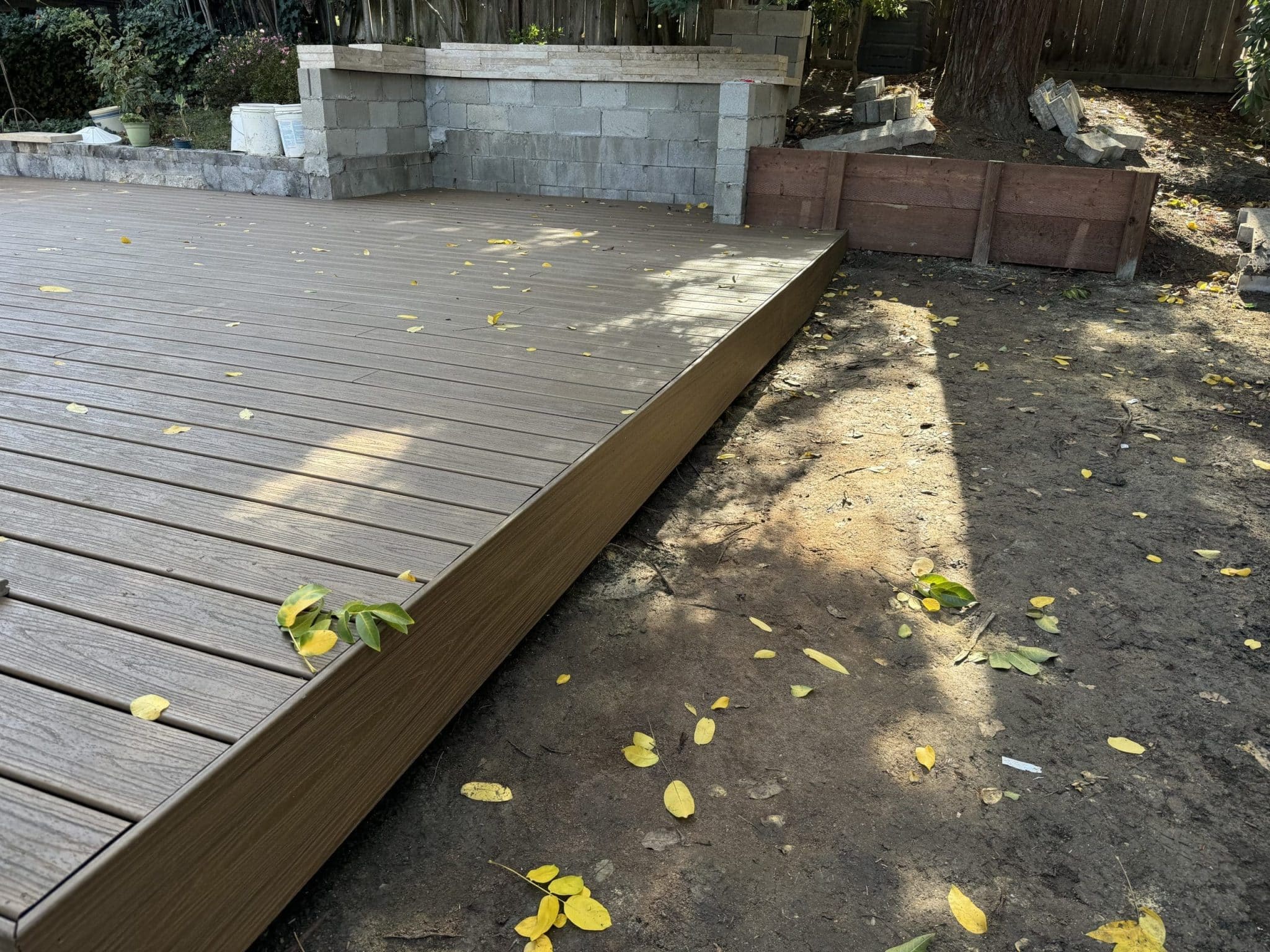
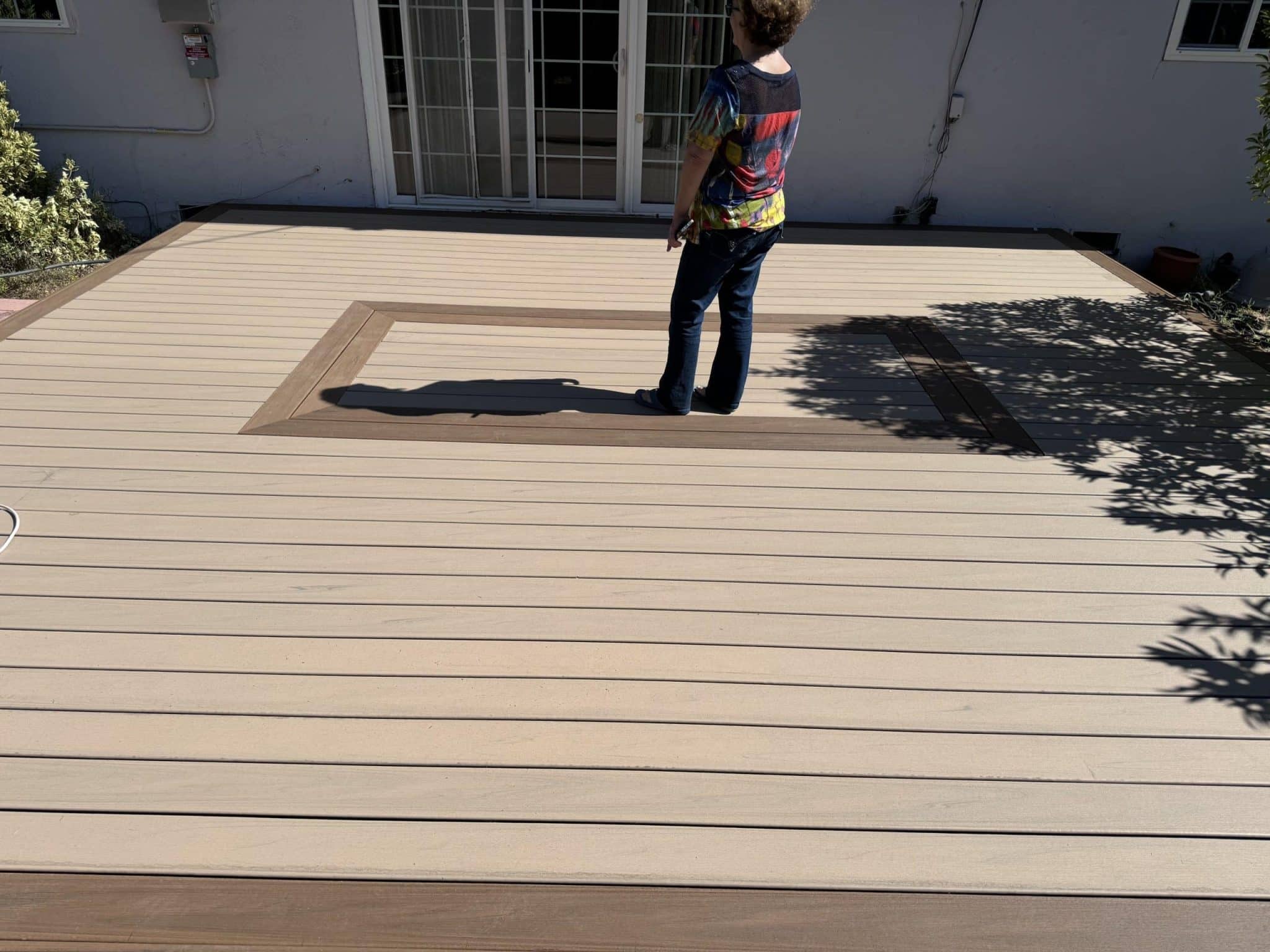
Look and probe: soft or spongy boards, railings that move, rusted fasteners, gaps where the deck meets the house, and sagging or cracked framing. If the deck moves when you walk on it or the railing flexes, stop using it until it is inspected. A contractor can check the parts you cannot see, especially the ledger connection and framing.
Often yes. Replacing a section of boards, a railing or a set of stairs can be done on sound framing. The inspection decides whether partial repair is sensible or whether problems underneath mean the whole deck should be replaced.
It depends on the deck. In San Jose, a deck repair needs a permit if the deck is 200 square feet or larger, 30 inches or more above grade, attached to a dwelling, or serves a required exit door or landing. Confirm with your city before work starts.
Structural repairs and framing can usually be done between storms, but many finishes and sealers need dry weather to cure. Scheduling depends on the forecast and the scope.
Wood is repairable board by board but needs regular sealing. Composite needs less upkeep but does not fix framing and may not match older boards. If the structure is sound, either works; compare both if you are re-decking the whole surface.
It depends on what is failing: surface boards and railings are very different from structural framing or a ledger repair. We give a written estimate after inspecting the deck. Call (650) 749-7436 to schedule one.
Join hundreds of happy Bay Area homeowners who trusted Quartz Construction & Remodeling for their projects.
Completed projects
Full photo galleries from real Quartz Construction & Remodeling jobs. Tap a photo to view it full screen, or open the project for the full story.
Decks & balconies · 2 photos
A warm-toned composite deck with benches built into its edges, wide steps and a dark slatted privacy screen, set beside a mature shade tree.
Decks & balconies · 6 photos
A composite deck built on several levels, with cable railings around the open upper deck and black-baluster railings on the stairs beside the house.
Decks & balconies · 16 photos
A tired backyard rebuilt as one outdoor room: a raised deck with wide stairs and black metal railings, a paver patio, a flagstone path and new planting.
Verified reviews from our Google Business Profile. See all reviews on Google.
Licensed • CSLB#1003436 • Serving San Jose & Bay Area
Or call us directly: (650) 749-7436

Quartz Construction & Remodeling serves homeowners across the greater San Francisco Bay Area. Licensed CSLB Contractor #1003436 | BBB A+ Rated | 4.9⭐ (65+ Reviews)