


Patios & patio covers · 3 photos
Covered Patio with a Lattice Extension and Ceiling Fans
A covered patio that combines a solid roof with ceiling fans and lights and an open lattice extension for filtered sun.


Patio contractor · San Jose & the Bay Area
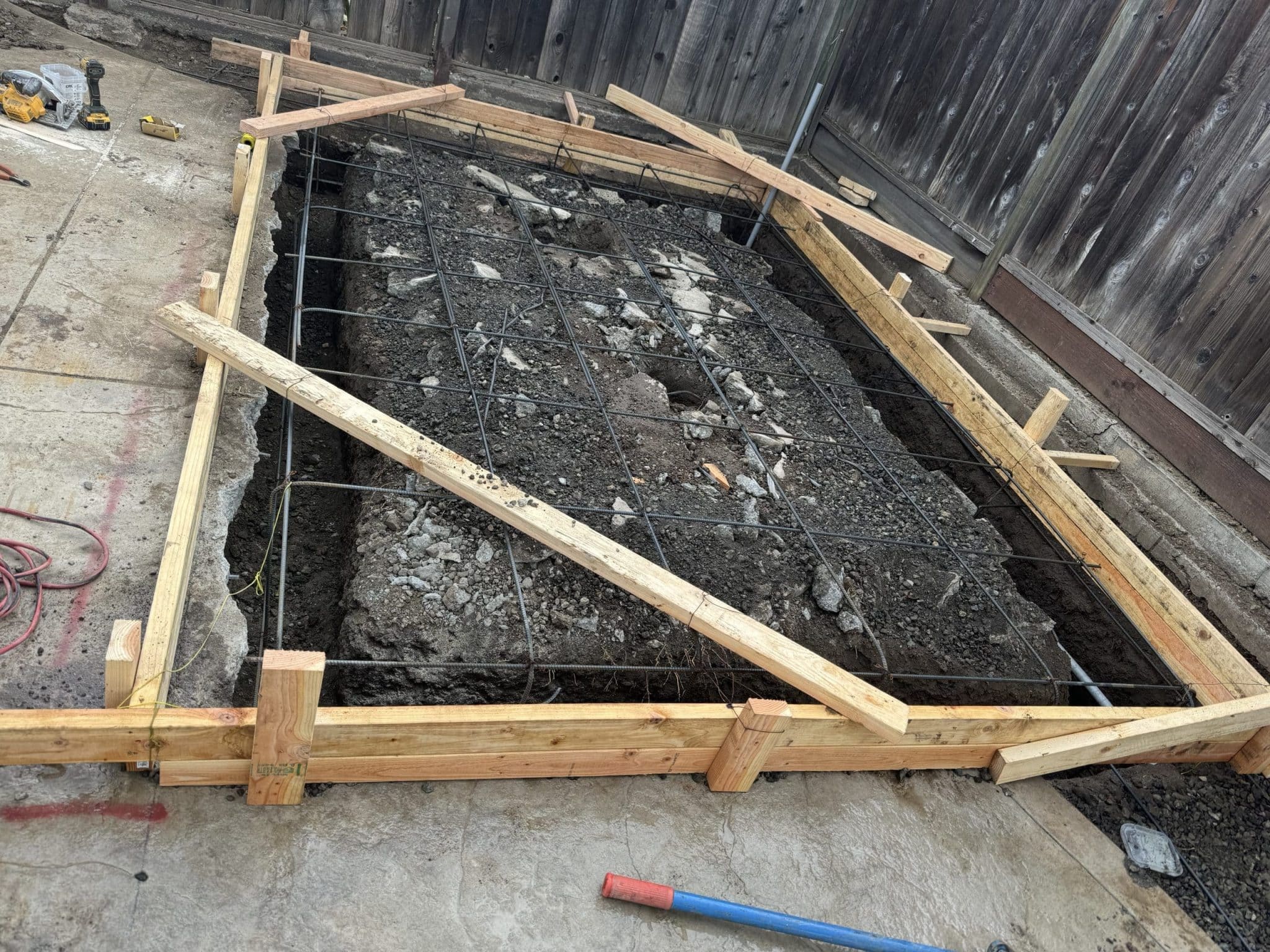
A patio has to do two jobs at once: drain water away from the house and give you a flat, durable surface to actually use. We grade the site, build the base right, and lay the surface so both keep working for years.
Industry Resources & Standards:
Drainage and base preparation decide whether a patio lasts, not the surface material. A patio that slopes toward the house, or sits on a base that was not compacted and graded first, will crack, settle or pond water no matter what finish goes on top.
Get the grading and base right, choose a surface that fits how you will use the space, and a patio needs very little attention for years.
These are the questions worth asking before work starts, not after.
The patio should slope away from the house, roughly 1/4 inch per foot, so water never collects against the foundation.
Next step: Have the grade checked before any base material goes down.
A compacted gravel base, properly graded, keeps a concrete slab or paver surface from cracking or settling unevenly.
Next step: Do not let a contractor skip or shortcut base compaction to save time.
Poured concrete, pavers and natural stone each handle weight, weather and repairs differently.
Next step: Match the material to how the space will be used, not just the look.
A patio sized for furniture, grilling and traffic flow works better than one sized to fill the yard.
Next step: Plan the layout around actual use before pouring anything.
Where the patio meets the lawn, a walkway or the house needs a clean, stable edge so it does not erode or trip hazard over time.
Next step: Ask how edges will be finished and maintained.
Patio covers and roofed structures generally need a building permit; a simple unroofed slab often does not, but rules vary by city and by scope.
Next step: Confirm requirements with your city before starting.
| Material | Strengths | Trade-offs |
|---|---|---|
| Poured concrete | Durable, affordable, can be stamped or stained for texture and color | Can crack with poor base or settling; repairs are harder to blend in |
| Pavers | Individual units can be lifted and reset if one settles or cracks; many styles available | More joints to maintain; base prep matters even more than with a slab |
| Natural stone | Distinct look, very durable material | Higher material and labor cost; irregular shapes take longer to lay |
Whichever surface you choose, the base and drainage underneath it matter more to how long it lasts than the material on top.
Walk the yard, discuss how you will use the space, and plan size, layout and drainage before anything is ordered.
Confirm with the city whether the scope (especially a patio cover or roofed structure) needs a permit before work starts.
Remove existing material, grade the site so water drains away from the house, and set the base depth.
Compact a gravel base in layers and install any drains or gravel trenches the site needs.
Pour and finish concrete, or set pavers or stone, with attention to joints and edges.
Review the finished patio with you, including care and what to watch for after the first rainy season.
It depends on the scope. The City of San Jose requires a building permit for many residential construction projects, and attached patio covers and other roofed accessory structures generally need their own permit; a simple, unroofed concrete or paver patio at grade is often exempt, but requirements vary by city, size and whether the project is attached to the house. Source: City of San Jose, When Is a Building Permit Required? (checked 2026-10-11). Confirm the requirement for your specific project with the city before work begins.
Why it matters: a patio cover or any structure attached to the house is the scope most likely to need a permit and inspection.
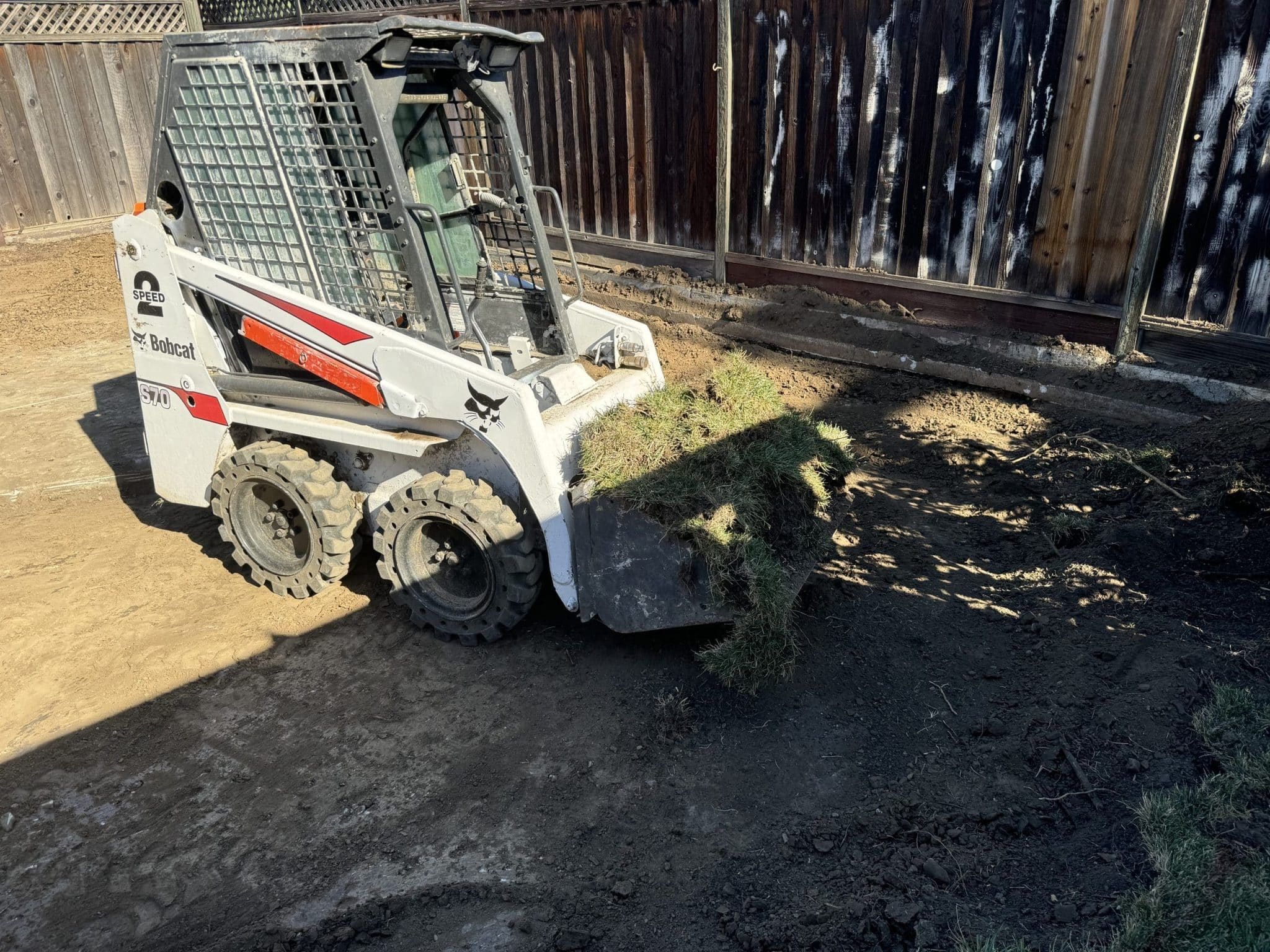
It depends on size, material and site conditions. Excavation, grading and base work take longer than the surface installation itself, especially if drainage needs to be corrected. We give a written timeline after the site visit.
Often not for a simple, unroofed concrete or paver patio at grade, but a patio cover or any structure attached to the house generally does need a permit. Confirm with your city before starting; rules vary by scope and jurisdiction.
Both can last decades with a properly compacted, graded base. Pavers have the advantage that an individual unit can be lifted and reset if the ground shifts; a cracked section of a concrete slab is harder to repair invisibly.
Sometimes. If the cracking is limited and the base underneath is stable, sections can be repaired or releveled. Widespread cracking or settling usually points to a base or drainage problem that repair alone will not fix.
Cost depends on size, material, site grading and drainage work needed. We give a written estimate after seeing the site. Call (650) 749-7436 to schedule one.
Join hundreds of happy Bay Area homeowners who trusted Quartz Construction & Remodeling for their projects.
Completed projects
Full photo galleries from real Quartz Construction & Remodeling jobs. Tap a photo to view it full screen, or open the project for the full story.
Patios & patio covers · 3 photos
A covered patio that combines a solid roof with ceiling fans and lights and an open lattice extension for filtered sun.
Patios & patio covers · 3 photos
A patio cover at the edge of the pool, with a wood-look slatted ceiling on a black frame, ceiling fans and recessed lights over a light travertine deck.
Patios & patio covers · 7 photos
A black aluminum screen enclosure that covers the pool, the deck around it and the back patio, with a hipped screen roof and a low rail along the base.
Verified reviews from our Google Business Profile. See all reviews on Google.
Licensed • CSLB#1003436 • Serving San Jose & Bay Area
Or call us directly: (650) 749-7436

Quartz Construction & Remodeling serves homeowners across the greater San Francisco Bay Area. Licensed CSLB Contractor #1003436 | BBB A+ Rated | 4.9⭐ (65+ Reviews)