


Materials guide · Hardscape
Pavers, poured concrete and gravel all make a usable outdoor surface. Where they really differ is what happens to rainwater, how much upkeep they ask for, and how they age — not which one looks nicest on day one.
- 9 minute read
- Updated November 6, 2026
- Sources: EPA · SCVURPPP · CMHA/ICPI · City of San Jose · SF Bay RWQCB
The short answer
Poured concrete sheds nearly all rain off its surface, which is simple until that water has to go somewhere — a drain, a swale or the street. Pavers can be installed as a permeable system that lets water soak through the joints into a stone base below, trading some of that runoff problem for a joint-maintenance routine. Gravel is naturally permeable with no joints to maintain, but it moves, ruts and needs replenishing over time.
None of the three is simply “better.” Bay Area cities and the regional stormwater program care about how much hard, impervious surface a project adds, so the drainage behavior below is not just a design preference — on larger jobs it can affect what your permit requires.
Four things to know first
- 1
It's a system, not just a surface
Permeable pavers only work as designed if there is an open-graded stone base and drainage path underneath. Lay pavers on a standard dense base and they behave like a solid surface with extra joints to maintain.
- 2
Maintenance timelines differ a lot
Gravel needs periodic raking and topping up. Permeable paver joints need vacuuming/resweeping on a schedule or they clog. Plain poured concrete needs the least routine attention but the most planning for where water goes.
- 3
Impervious area can trigger review
The regional stormwater program (C.3) requires treatment measures on projects that create or replace 5,000 sq. ft. or more of impervious surface — permeable paving is one of the ways projects reduce that count.
- 4
Grading rules apply regardless of material
San Jose requires a grading/drainage permit for work that changes how a site drains, and an erosion-control plan for grading between October 1 and April 30 — that is about the site, not which material you choose.
How each material actually drains
“Drainage” gets used loosely in sales conversations. What actually matters is whether water soaks in where it falls, or has to be carried somewhere else. Each card below opens a short note on what that means for your yard.
Poured concrete (standard)
A solid slab sheds water off its surface to wherever it’s graded — a drain, a planting bed or the yard’s low point. EPA groups standard concrete and asphalt with the impervious surfaces that generate the most runoff.
Pavers (permeable system)
Permeable interlocking pavers use open joints over a crushed-stone reservoir. EPA describes permeable pavements as green infrastructure that lets rain and snowmelt seep through to the soil below instead of running off.
Gravel / decomposed granite
Loose aggregate has no sealed surface at all, so water generally infiltrates between the stones. There’s no joint system to maintain, but there’s also nothing holding the material in place under traffic or on a slope.
The base matters as much as the surface. A permeable paver system only infiltrates water if the stone base underneath is open-graded and connected to the soil or a drain — a contractor who skips that detail has built a solid patio with extra seams.
Side-by-side comparison
No prices here — costs depend on the site, base prep and access, and we’d rather give you a real number after a visit than a misleading range. This is about how the three materials behave once they’re in the ground.
| Permeable pavers | Poured concrete | Gravel | |
|---|---|---|---|
| Where rainwater goes | Through the joints into a stone base, if the system is built to infiltrate | Runs off the surface to wherever the slab is graded or drains | Mostly infiltrates between loose stones; some runoff on compacted paths |
| Routine maintenance | Vacuum/resweep joints on a schedule — CMHA notes infiltration can fall from roughly 50 in/hr with regular sweeping to 3–4 in/hr without it | Occasional sealing and crack monitoring; otherwise low upkeep | Periodic raking, weed control and topping up material that migrates or washes out |
| What shortens its life | Letting joints clog with sediment, or a base that was never open-graded | Settling, root intrusion and freeze-thaw-style cracking (less common in the Bay Area, but drainage still matters) | Erosion on slopes, rutting under vehicle traffic, material walking onto adjacent surfaces |
| Stormwater accounting | Can count toward reducing a project’s impervious-surface total | Counts as impervious surface in stormwater calculations | Generally not counted as impervious if it stays loose and permeable |
Maintenance you’re signing up for
This is the part a lot of material comparisons skip. Here is what upkeep actually looks like for each surface over its life.
Permeable pavers: sweep and inspect
CMHA’s maintenance guidance for permeable interlocking concrete pavement calls for inspecting joints a few times a year and vacuuming with a full vacuum sweeper — not a regenerative-air sweeper — when sediment buildup is visible.
Permeable pavers: refill joints
After vacuuming, the joint stone has to be replaced. Skipping this step is the single biggest reason permeable paver systems stop infiltrating well before the pavers themselves wear out.
Poured concrete: watch the joints and grade
Control joints and the slope away from the house matter more than the concrete itself. A slab that holds water against a foundation is a drainage problem, not a concrete problem.
Poured concrete: reseal on a schedule
Decorative or stamped finishes typically call for resealing every few years; plain broom-finish slabs need it far less often.
Gravel: rake and re-level
Loose aggregate migrates under foot and vehicle traffic. Seasonal raking and the occasional top-up keep the depth and drainage path consistent.
Gravel: manage edges and weeds
A buried edge restraint keeps gravel from spreading into planting beds or the street, and a weed barrier under the stone cuts down on ongoing maintenance.
When the stormwater rules get involved
Most residential patios, walkways and small driveways never touch these thresholds. They matter most on larger backyard remodels, new driveways and additions that add significant hardscape. This summary was checked against the agencies’ own pages in October 2026 — confirm current thresholds with your city before you plan around them.
Regional stormwater treatment threshold
Santa Clara Valley’s Municipal Regional Stormwater Permit (Provision C.3) requires treatment measures on projects that create or replace 5,000 sq. ft. or more of impervious surface. Permeable paving is one recognized way to reduce the impervious total on a larger project.
Source: SCVURPPP C.3 Stormwater Handbook
Smaller residential projects
A single-family home project with appropriate stormwater controls, and work like interior remodeling or routine repaving, generally does not trigger the C.3 worksheet. Most backyard patio or walkway jobs fall well under the threshold — check with your city if you’re unsure.
Source: SCVURPPP C.3 Stormwater Handbook
Grading and drainage permits
San Jose requires a grading permit (or a documented exemption) for excavating, grading or installing onsite storm drainage, so the site drains properly and doesn’t affect neighboring property. Grading between October 1 and April 30 needs an approved erosion-control plan.
EPA on permeable systems
EPA’s Soak Up the Rain program describes permeable pavement — pervious concrete, pervious asphalt and interlocking pavers — as green infrastructure that lets rain soak through to a stone reservoir and the soil below, reducing runoff and filtering some pollutants.
The threshold got lower, not higher
The San Francisco Bay Regional Water Board’s current Municipal Regional Stormwater Permit (MRP 3.0, adopted May 2022, effective July 2022) lowered the impervious-surface threshold for most regulated projects from 10,000 sq. ft. to 5,000 sq. ft., and added a requirement for permittee cities to inspect and track pervious-pavement installations going forward. More Bay Area resurfacing and driveway-replacement projects fall inside the threshold than a few years ago, not fewer.
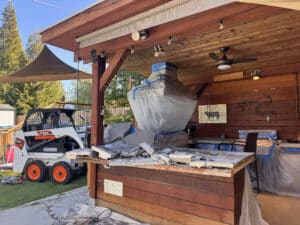
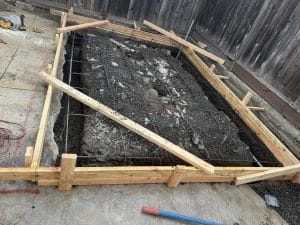
A real Quartz slab, start to finish
Concrete is the material in this comparison we can show you from the ground up, on one of our own San Jose backyard projects.


The same project continued into a backyard structure once the slab had cured:

How to choose for your site
Walk through this before you pick a material
Tick items as you go through them with your contractor. On this device your progress is remembered, and nothing is sent anywhere.
0 of 7 checked
Questions homeowners ask
Do permeable pavers actually need more maintenance than concrete?
In terms of routine attention, yes. A plain concrete slab mostly needs to be watched for cracking and resealed occasionally if it’s decorative. A permeable paver system needs its joints inspected and vacuumed on a schedule, because CMHA’s maintenance guidance shows infiltration rates drop sharply once joints clog with sediment. Both are manageable — they’re just different routines.
Is gravel the lowest-maintenance option?
It depends on what you mean by maintenance. Gravel has no sealing, no joints and no cracking to worry about, but it migrates, ruts under vehicles and needs periodic raking and topping up, especially on a slope or a frequently used path. “Low maintenance” and “low effort” aren’t quite the same thing here.
Will my project trigger stormwater requirements?
Most backyard patios, walkways and single-driveway projects are well under the 5,000 sq. ft. impervious-surface threshold that triggers Santa Clara Valley’s C.3 treatment requirements. Larger additions, new driveways or whole-yard hardscape plans are where it’s worth checking with your contractor and city before you finalize material choices.
Can I mix materials — pavers for a patio, concrete for a driveway?
Yes, and it’s common. Many of our projects use poured concrete where heavy, consistent traffic and a clean edge matter most (driveways, entries) and pavers or gravel in lower-traffic areas like patios, paths and planting borders.
Does a grading or drainage permit apply to a patio or walkway?
It depends on whether the work changes how the site drains, not on which material you choose. San Jose requires a grading permit, or a documented exemption, for excavating, grading or installing onsite storm drainage. Ask your contractor to confirm what your specific scope needs before work starts.
Which material will Quartz recommend for my yard?
We don’t default to one material. The right call depends on your site’s slope, existing drainage, how the space gets used, and how much upkeep you want to take on. A walkthrough is the fastest way to get a straight answer for your specific yard.
Sources and next steps
Where to read the originals yourself:
- EPA Soak Up the Rain: Permeable Pavement, how permeable pavements infiltrate rainwater.
- SCVURPPP C.3 Stormwater Handbook, impervious-surface thresholds and treatment requirements for Santa Clara Valley.
- CMHA/ICPI: Maintenance Guidelines for Permeable Interlocking Concrete Pavement, joint vacuuming and infiltration-rate guidance.
- City of San Jose: Grading and Drainage Permits, when a grading/drainage permit or erosion-control plan applies.
- SF Bay RWQCB: Order No. R2-2022-0018 (MRP 3.0), the current regional stormwater permit and its 5,000 sq. ft. threshold.
- CSLB license check, to verify any contractor’s license and classifications. Quartz Construction & Remodeling’s license number is 1003436.
Facts in this guide were checked against these pages in October 2026, with the MRP 3.0 threshold update checked again in November 2026. Regulations and thresholds change, so verify current requirements with your city or the regional program before you rely on them.
