



Planning guide · Bathroom remodeling
An undersized bathroom fan looks fine on the shelf and fails in the wall. Here is what the airflow number on the box actually has to do, and how to size it so it meets code and keeps moisture out of your walls.
- 9 minute read
- Updated November 1, 2026
- Sources: California Mechanical Code · ASHRAE 62.2 (Title 24) · EPA
The short answer
A bathroom exhaust fan has two jobs: meet the airflow number your local code requires, and actually move that much air to the outside once it is installed. California’s mechanical code sets a floor — 50 CFM intermittent or 25 CFM continuous — and the Title 24 energy-code compliance path built on ASHRAE 62.2 uses 50 CFM intermittent or 20 CFM continuous, with a sound limit on top. Either path exists because moisture that doesn’t leave the room gets absorbed into drywall, insulation and framing, and mold needs exactly that kind of sustained dampness to grow.
The CFM printed on a fan’s box is a lab rating, not a guarantee. Duct length, elbows, a roof cap and a long run through the attic can cut real-world airflow well below rated capacity, which is the gap that gets missed most often.
Four things to know before you buy a fan
- 1
Two numbers, one job
Intermittent-use fans are rated higher (50 CFM) because they only run during and after a shower; continuous fans run on low speed around the clock at a lower rate (20–25 CFM depending on which code path applies).
- 2
Sound rating matters too
A fan that is too loud gets switched off by the people living with it. ASHRAE 62.2 sets sound limits precisely because an unused fan ventilates nothing.
- 3
Rated CFM is not installed CFM
Long duct runs, tight elbows and undersized roof caps reduce real airflow. Oversizing the rated CFM is the usual fix for a long or complicated duct path.
- 4
Termination point is not optional
Code requires exhaust ducting to the exterior — never dumping into an attic or wall cavity, where the moisture a fan is supposed to remove just relocates.
Why the CFM number exists
A shower adds several pints of water vapor to bathroom air in a few minutes. That moisture has to go somewhere: out through an exhaust duct to the exterior, or into the room’s surfaces — the drywall, the ceiling, the back of the mirror, the framing inside the wall. CFM (cubic feet per minute) is simply how fast the fan is rated to move air. The code minimums exist because below a certain exchange rate, the room can’t clear moisture faster than normal use adds it.
That is also why a fan is rated two different ways. An intermittent fan is sized to clear a burst of moisture quickly while someone showers and for a few minutes after. A continuous fan runs at a lower, quieter speed all day as part of the home’s overall ventilation, so it needs less peak capacity but has to keep working, which is why its sound rating is stricter.
The code numbers, side by side
Two code paths touch a bathroom fan in California, and they don’t use identical continuous-operation numbers. Either one is a legitimate way to comply — which one applies depends on how your contractor documents the installation.
| California Mechanical Code (CMC §405.3.1) | Title 24 energy code, ASHRAE 62.2 path | |
|---|---|---|
| Intermittent operation | 50 CFM minimum | 50 CFM minimum |
| Continuous operation | 25 CFM minimum | 20 CFM minimum |
| Sound limit | Not specified in this section | 3 sone intermittent / 1 sone continuous |
| Discharge point | Directly to the outdoors — not the attic or a wall cavity | Directly to the outdoors |
| Typical use case | Baseline mechanical ventilation for any bathroom with a tub or shower | Whole-house ventilation strategy documented on the Title 24 energy calculations |
Figures checked against the sources linked at the bottom of this guide in November 2026. Code editions and local amendments change — confirm the current adopted code with your building department before you buy.
Sizing a fan for your bathroom
Both code paths set a minimum, not a target. A few practical sizing habits sit on top of the code floor:
- Match the number to how the fan will actually be used. If the plan is “on with the light switch, off when you leave,” size to the intermittent minimum. If the plan is a quiet fan that runs continuously as part of the house’s ventilation, size — and wire — for continuous duty.
- Oversize modestly for duct length. A fan rated right at the code minimum rarely delivers that much air once it is connected to real ductwork. Many installers pick a fan rated meaningfully above the minimum specifically to absorb that loss.
- Don’t oversize the sound along with the airflow. A bigger motor is often louder. Check the sone rating, not just the CFM, especially for a continuous-duty fan that needs to stay on.
- One fan, one bathroom, generally. A single large fan rarely ventilates two separate rooms well; a primary bath and a powder room usually need their own exhaust points.
The duct path: where airflow gets lost
The fan housing is rarely the weak link. The run between the fan and the outside air is. Every elbow, every extra foot of flexible duct, and every undersized or flapping roof cap reduces how much of the rated CFM actually leaves the house.

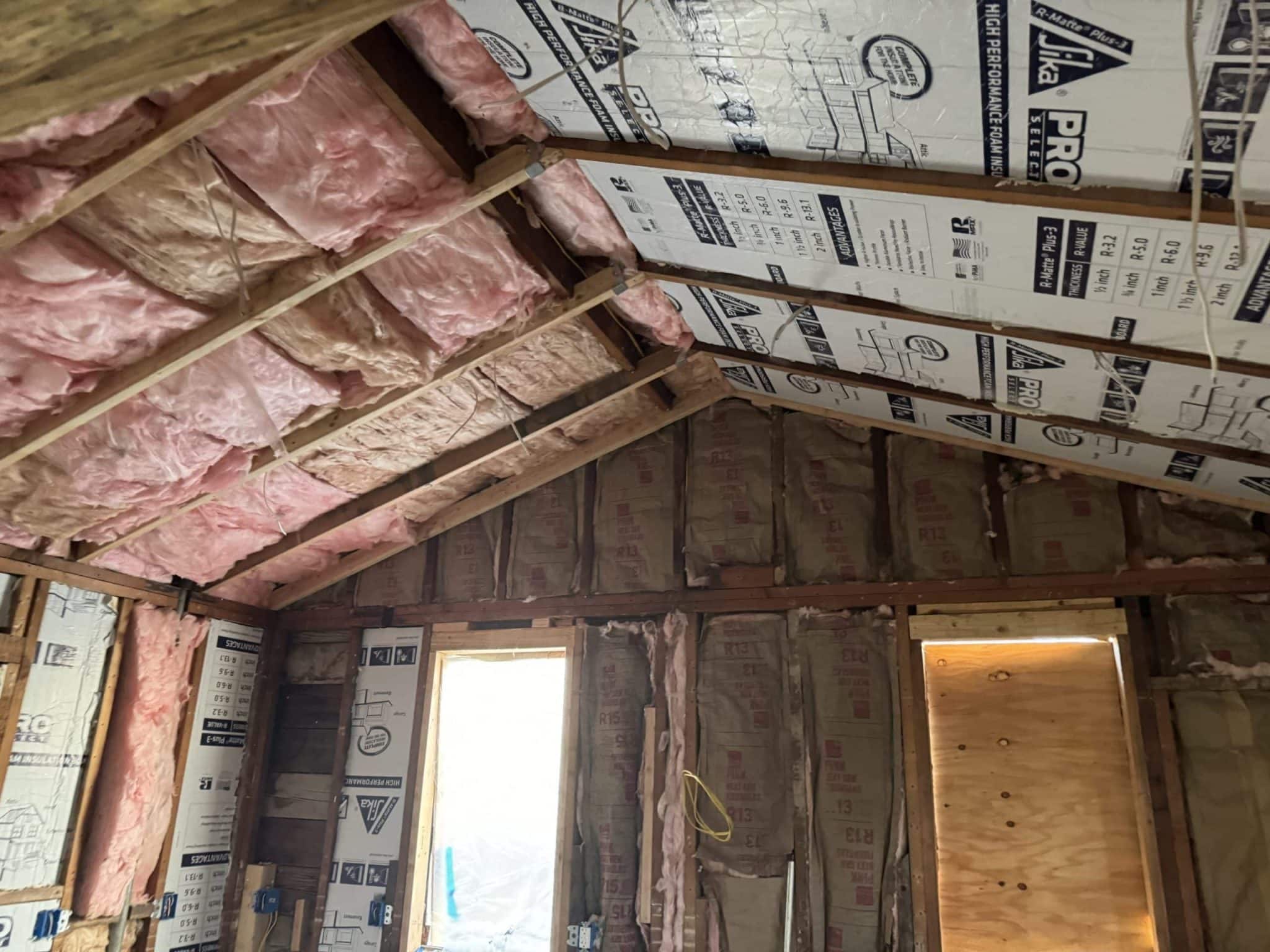
Three habits keep real-world airflow close to the rated number: run the shortest practical duct path, use smooth rigid or semi-rigid duct instead of long flexible runs where the layout allows it, and terminate at a cap sized for the fan rather than a generic one left over from another job. None of this shows up on the fan’s box, which is exactly why it gets skipped on a tight schedule.
How under-ventilation turns into mold
The EPA’s guidance on mold and moisture is blunt: mold needs moisture to grow, and controlling moisture is the only reliable way to control mold. The agency recommends keeping indoor relative humidity below 60%, ideally between 30% and 50%, and drying wet areas within 24–48 hours.
A bathroom that vents well keeps humidity from spiking and lingering after a shower. A bathroom with an undersized fan, a crushed duct, or a vent that dead-ends in the attic does the opposite — it holds warm, moist air against cool surfaces (an exterior wall, an attic-side ceiling, the underside of the roof deck) exactly where condensation and, eventually, mold take hold. By the time staining or a musty smell shows up on the finished surface, the moisture has often been cycling through the wall or ceiling cavity for a while.
Buying and installing: step by step
In order, this is how a fan replacement or a new bathroom’s ventilation should get specified.
Decide intermittent or continuous
Settle how the fan will actually be operated day to day — that decision drives which CFM minimum applies and how it gets wired.
Check the room against the minimum
Confirm the fan’s rated CFM meets or exceeds the code minimum for that operating mode, not just whatever was on the shelf.
Plan the shortest reasonable duct run
Map the path to the exterior before buying the fan. A long run with several elbows argues for a higher-rated fan, not a bigger fan box.
Match the roof or wall cap to the fan
A cap sized for a smaller fan restricts airflow no matter how the fan itself is rated.
Check the sound rating against the CFM
For a fan that will run continuously, prioritize a low sone rating — a fan nobody wants on all day doesn’t help ventilation.
Verify after installation
Once it’s in, confirm the fan runs, the damper opens, and air is moving at the exterior termination — not just that the motor is spinning.
Bathroom fan readiness checklist
Check each item before you buy or install
Tick items as you confirm them. On this device your progress is remembered, and nothing is sent anywhere.
0 of 9 checked
Questions homeowners ask
Does a window satisfy California’s bathroom ventilation requirement?
Many jurisdictions still allow an openable window as an alternative to mechanical ventilation in some bathrooms, but a bathtub, shower or combination fixture is commonly the trigger for requiring a mechanical exhaust fan regardless of a window’s presence. Confirm the specific requirement for your bathroom’s fixtures with your building department before you plan around a window alone.
Is a bigger CFM fan always better?
Not automatically. A fan sized well above what the room and duct path need can be noisier and more expensive without a ventilation benefit, and a continuous-duty fan that is too loud often gets switched off, which defeats the point. The goal is to meet or exceed the applicable minimum for the duct path and operating mode you actually have, not to buy the largest number available.
Can I vent a bathroom fan into the attic instead of running a duct outside?
No. Code requires the exhaust to discharge to the exterior of the building. Venting into an attic just moves bathroom moisture into a space with wood framing and insulation, which is a common cause of hidden attic mold and rot.
Why does my new fan feel weaker than the CFM rating on the box?
The CFM rating is measured in a lab with an ideal, short duct setup. Real installations lose airflow to duct length, elbows, and the resistance of the termination cap. That gap is normal, which is why sizing slightly above the code minimum for a longer or more complicated duct run is a common practice, not a workaround.
How does this come up during a bathroom remodel?
Any time a bathroom is remodeled and the ventilation equipment is touched — a new fan, a relocated duct, a layout change — the current code minimums apply to that work. It is a detail worth confirming with your contractor at the planning stage rather than after the ceiling is closed.
Sources and next steps
Where to read the originals yourself:
- Energy Code Ace: Air-Moving Equipment (ASHRAE 62.2, Section 7), the Title 24 energy-code compliance path and its CFM/sound minimums.
- California Energy Commission: Indoor Ventilation Based on ASHRAE 62.2, the state’s own explainer on the 62.2 ventilation rates adopted into Title 24.
- EPA: A Brief Guide to Mold, Moisture and Your Home, humidity targets and why moisture control is the core of mold prevention.
- California Building Standards Commission, the body that adopts and publishes the California Mechanical Code (CMC §405.3.1 bathroom exhaust minimums cited above).
- CSLB license check, to verify any contractor’s license and classifications. Quartz Construction & Remodeling’s license number is 1003436.
Facts in this guide were checked against these pages in November 2026. Code editions, local amendments and manufacturer specs change, so verify current requirements with your building department before you buy or install.
